Week of Prayer for Christian Unity 2026
Theme for the Week: One Body, One Spirit
The theme for the Week of Prayer for Christian Unity for 2026 comes from Apostle Paul’s letter to the Ephesians: “There is one body and one Spirit, just as you were called to the one hope of your calling” (Eph. 4:4).
Reflections

Author: Presiding Elder Spencer Francis Barrett
Devotional: Light for Unity
During the Week of Prayer for Christian Unity, we’re reminded that the Church has never been free from division. From early disagreements to modern tensions around culture, identity, and belief, the body of Christ has often struggled to live as one.
Yet Scripture calls us to a different posture. “Clothe yourselves with love, which binds us all together in perfect harmony” (Colossians 3:14). Unity isn’t sameness—it’s choosing love strong enough to hold our differences without letting them tear us apart.
Jesus prayed that we would be one as He and the Father are one. That kind of unity requires surrender: letting go of the need to be right, to be first, or to be in control. It asks us to trust that faith is revealed not in labels or traditions, but in how we love our neighbor.
As 1 John 4:12 reminds us, God becomes visible when we love one another. The light we receive from God is meant to shine through us—guiding us to embrace the diversity of God’s creation and to walk together as one in Christ.
May that light lead us toward deeper compassion, wider welcome, and a unity rooted in love.
Presiding Elder Spencer Francis Barrett
Pacific Northwest Conference-Cascade District,
African Methodist Episcopal Church

Author: Rev. Dr. Kara Markell
I learned ecumenism from the choir loft. Long before I attended seminary and studied ecumenical foundations and history, long before I experienced the Lima liturgy I gained an experience of ecumenism as a church musician. Long before I was asking questions about hermeneutical frameworks and doctrinal orthodoxy, I was experiencing the unity that Christ assures us is ours.
Over the course of many years I’ve sat in the choir loft and at the piano bench, singing, playing and directing music in Methodist, Lutheran, Disciples, Episcopal, and UCC congregations. What I learned is that our hymn books often contain the same songs, our liturgies use the same texts, our preaching is rooted in the same stories, our rituals form us in similar ways. We share so much in common, but often we’re not aware.
Those experiences moved me into more thoughtful engagement, forming within me a deep desire to make this unity visible; to bring awareness to all that we share. I’ve read the historical texts and engaged in meaningful and challenging conversations about doctrine and practice. But what moves me most, is the embodied experience of unity. It is there that the spirit moves in and through us to make our unity real and tangible. From there, we can go forward with confidence, that we’re not doing the work of justice and peace alone, but part of a living, breathing, singing, praying body in the world.
Rev. Dr. Kara Markell

Author: Rev. Dr. Rick Rouse
“One body, one spirit, one hope” is a powerful vision of who we are meant to be as the people of God, regardless of ethnicity, faith tradition, or station in life. Unfortunately, there are forces at play in our world that would divide rather than unite us. There are those that seek to drive a wedge between us by focusing on differences or demonizing those who are not of our same tribe. Xenophobia—fear of the Other—has unfortunately been used by politicians and religious leaders as a strategy to sow the seeds of fear and distrust that would turn us against each other.
But the Creator reminds us that ALL of God’s children are precious and deserve to be treated with dignity and respect. The hope to which we are called is just that—to recognize our oneness, our common humanity, our mutual aspirations. It is to acknowledge the shared values of many faith traditions. At the International Peace Museum in Dayton, Ohio there is a “Peace Labyrinth” quilt designed by artist Janet McTavish. In her tapestry, she sought to show that love of neighbor and the Golden Rule are common threads found in all the world’s religions.
My prayer is that we might come to see our nation as a rich tapestry of diversity; that we are richer for the contributions of the many different colored threads that make us who we are. Martin Luther King, Jr. spoke of God’s vision for Beloved Community, one that could transform people and relationships grounded in reconciliation, justice, trust, and love. In his 1963 “I Have Dream” speech, King said: “This is our hope…with faith, we will be able to hew out of the mountain of despair a stone of hope. With this faith we will be able to transform the jangling discords of our nation into a beautiful symphony of brotherhood.”
Rev. Dr. Rick Rouse
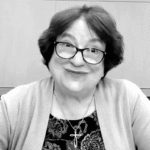
Author: Rev. Kathryn Sharp
This year’s week of prayer theme is such a beautiful call for unity from Apostle Paul. Unity was emphasized in so many of his letters to early Christians. We can assume it was a great challenge for each community.
Today, many Americans can’t remember a time when we’ve been more stridently divided. Many willfully ignore what we know to be true: all creation is born from one small, dense ball of matter that exploded into countless galaxies, stars and planets filling the void of space. We are one: the same stardust. Even though some would stoke the division, we see ordinary Americans resisting the arrest and detention of our immigrant neighbors. Acting as one body, they respond to attacks on the most vulnerable among them.
Human beings are often most aware of our oneness in tragedy and crises. We feel compassion for those who are suffering. As a new member of the Jewish/Christian dialogue table of the National Council of Churches and National Council of Synagogues, I hear and feel the raw pain of our Jewish colleagues caused by the invasion of Israel on October 7, 2023. And more recently, at an interfaith vigil for the victims of Bondi Beach, a rabbi proclaimed that Jews worldwide suffered from the attack as one body. Christians understand this reality – that when one suffers, the whole body suffers.
My faith tradition, Community of Christ, received the following counsel from our President Steven Veazey in 2007:
Above all else, strive to be faithful to Christ’s vision of the peaceable Kingdom of God on earth. Courageously challenge cultural, political, and religious trends that are contrary to the reconciling and restoring purposes of God. Pursue peace. [Doctrine and Covenants 163:3b, Community of Christ]
These words of inspiration encourage us to seek unity and peace within the human family. I hope they are as meaningful to you as they are to me.
Rev. Kathryn Sharp, Community of Christ
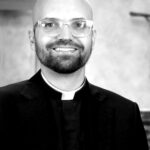
Author: Joseph Wolyniak
This past November, a watershed ecumenical moment slipped past all but the most ardent ecclesial observers. Pope Leo XIV and Ecumenical Patriarch Bartholomew gathered with other Christian leaders at Iznik, Türkiye, to mark the 1,700th anniversary of the Nicene-Constantinopolitan Creed—a confession that has united most Christians since 325/81. In the ecumenical service, Leo not only summoned Christians to “overcome the scandal of divisions,” he exhibited commendable capaciousness by omitting the controversial filioque clause that has strained East–West relations since 589.
Amid myriad pressing concerns in our world, many may understandably roll their eyes. (“Seriously?! 1,400 years of Christian division over one little F-word?”) But without belaboring doctrinal details, what the Pope signaled is that essential element of unity: humility. The oft-used modern maxim – “you can either be right or in relationship” – reflects ancient biblical wisdom. “In humility,” Paul urges the Philippians, “regard others above yourselves” (Phil. 2:3–4). Likewise, to the Romans he writes: “If it is possible, as far as it depends on you, live at peace with everyone” (Rom. 12:18). These scriptural admonitions weren’t given in a vacuum. They reflect an otherworldly insight for rather-worldly humans, afflicted as we are with solipsistic pride. It is of some comfort to remember that the church in Paul’s day was no different than our own; even Jesus’ chosen disciples were plagued by ever-divisive infighting.
Yet herein lies the crux: “if it is possible, as far as it depends on you.” From a human view, our divisions seem impossible to mend. Thanks be to God, though, the unity we seek doesn’t depend on us—not solely, not even primarily. We are simply invited to participate in the eternal unity of the triune God; a unity given, not chosen, in baptism. Our part, as St. David of Wales reminds us, is to “do the little things.” To practice a little humility, to hold back words that offend. Such things may seem utterly irrelevant on a cosmic scale, but in Christ the little things are never lost.
Joseph Wolyniak, Episcopal priest, vicar of St David Emmanuel (Shoreline, WA), and affiliate faculty in theology at Seattle University.